
The favourite traditional street food is made easy in a single pan. No steamer required
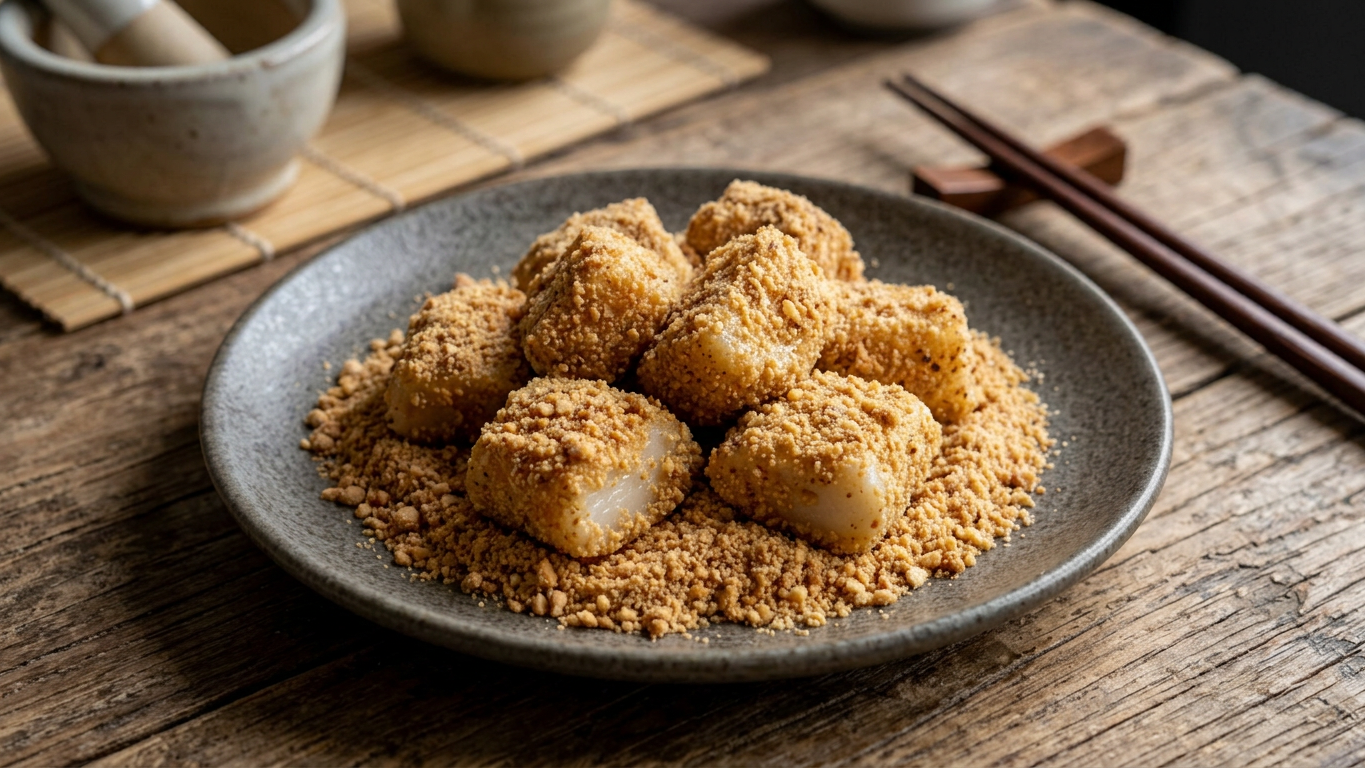
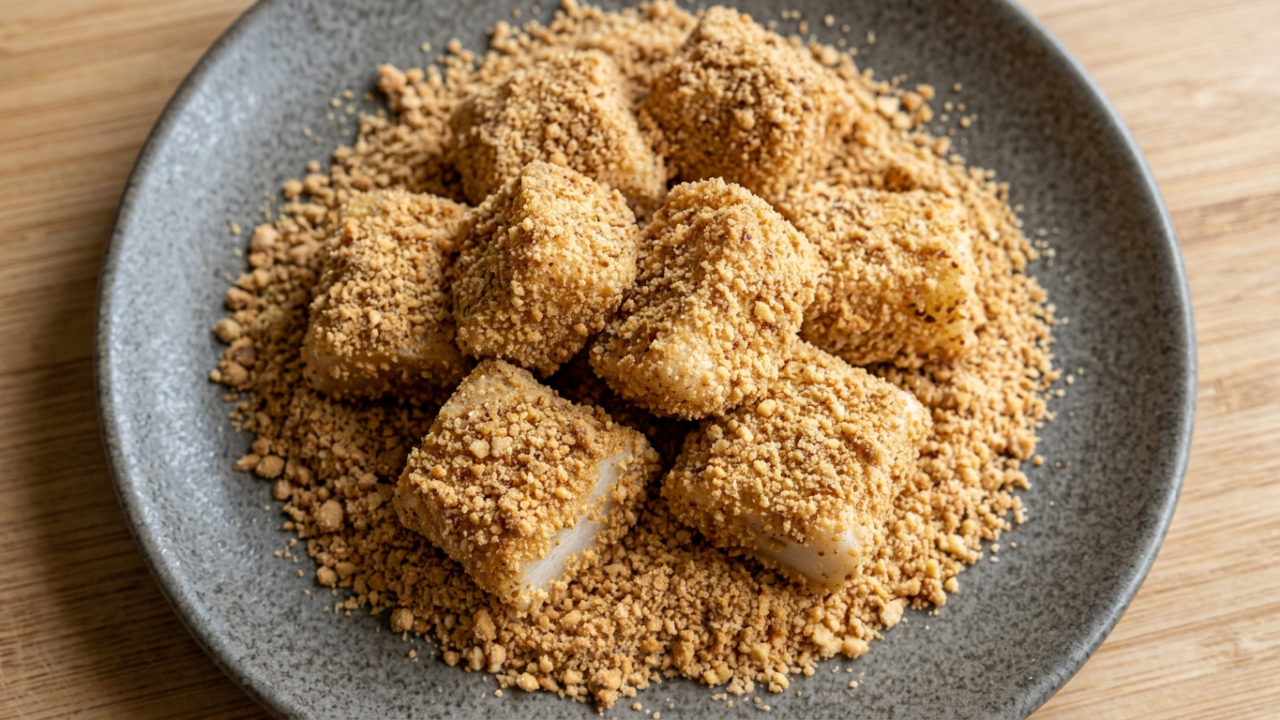
A soft, chewy and nostalgic street food favourite, this pan-fried Mua Chee is made easily in one pan – no steaming required. With fragrant shallot oil and a nutty peanut coating, this method delivers excellent texture while staying soft even after cooling.
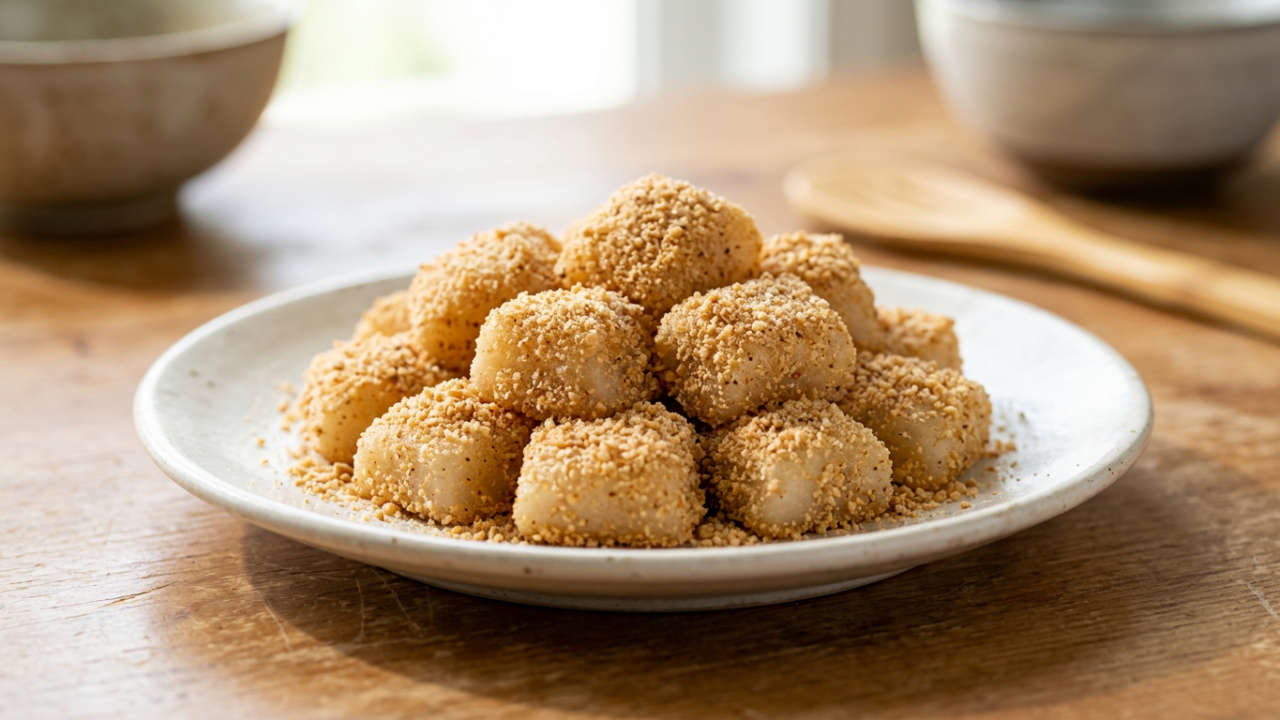
Store the uncoated dough tightly wrapped in the fridge, reheat until soft, then snip and coat with peanuts just before serving.
YouTube Link: https://youtu.be/5saE83_deXw
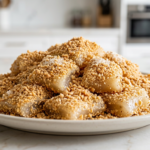
Pan-Fried Mua Chee
Stays Soft for Days
Ingredients
Chewy Dough
- 750 g glutinous rice flour
- 1 litre water
- 2 scoops of shallot oil
Shallot Oil
- 12 shallots thinly sliced
- Cooking oil enough to submerge shallots
Coating
- 200 g roasted peanuts finely ground
- 80 g fine sugar adjust to taste
Instructions
Step 1: Make Shallot Oil
- Start by slicing 15 pieces of shallots thinly
- Add enough oil to keep all the shallots completely submerged.
- Then add one test piece of shallot. Turn the heat on medium high when its bubbling,
- then add the rest of the sliced shallots
- Reduce the heat slightly and continue stirring. Cook for about 8 to 10 minutes until the shallots turn a light golden brown and the bubbling becomes very gentle.
- Immediately strain the shallots and oil into a heatproof bowl. Spread the shallots on a paper towel-lined tray and allow to cool completely. Set aside the shallot oil for later use.
Step 2: Prepare Peanut Coating
- In a shallow bowl, mix the ground peanuts and sugar.
- Adjust sweetness to your preference and set aside.
Step 3: Prepare the Dough
- In a pot, whisk together glutinous rice flour and water until smooth and lump-free.
Step 4: Pan-Fry the Dough
- Heat a non-stick pan over medium-low heat and add 2 scoops of shallot oil.
- Pour in the flour mixture and stir continuously using a pair of chopsticks. The mixture will thicken, clump, and gradually form a sticky, translucent dough.
- Continue kneading and folding the dough in the pan for another 2 to 3 minutes.
- Press it down occasionally to lightly toast the surface for added fragrance.
Step 5: Snip and Coat
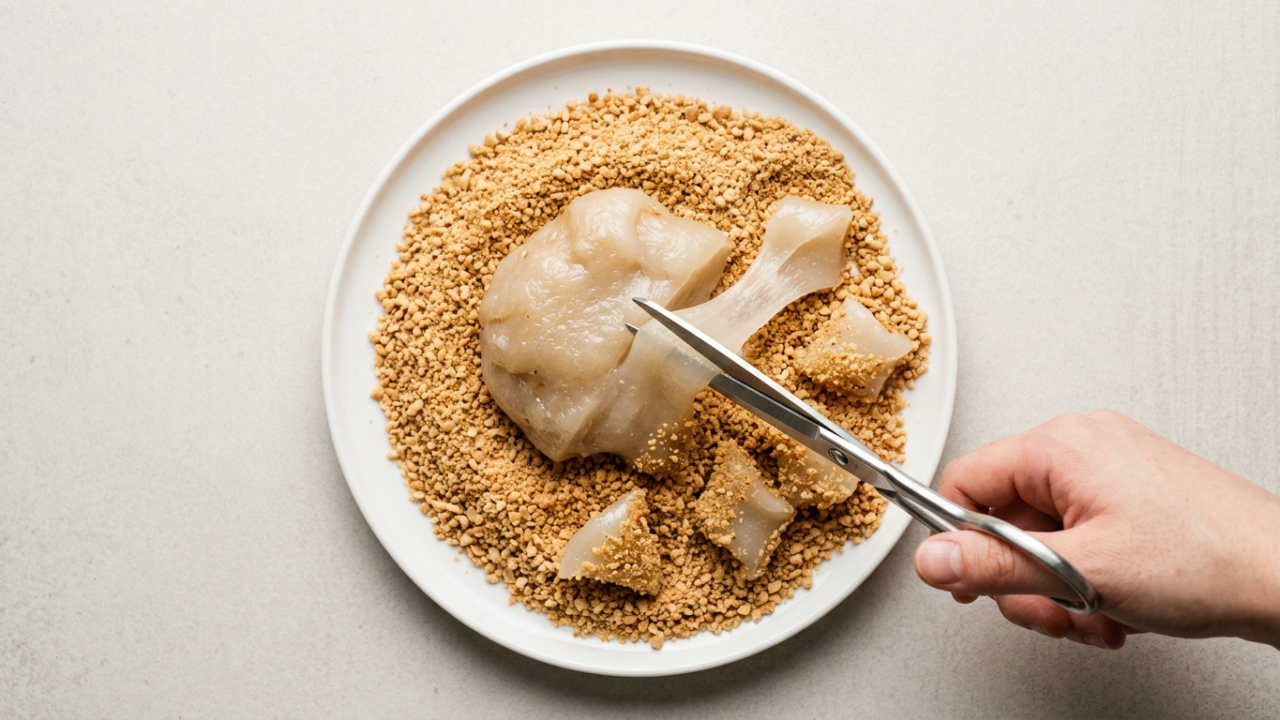
- Lightly grease a pair of kitchen scissors.
- Snip the warm dough directly into bite-sized pieces into the peanut mixture.
- Toss quickly until all pieces are evenly coated.
Step 6: Serve
- Serve warm for the best texture and flavour.
- The dough remains soft even after cooling thanks to the pan-kneading method.
Notes
Pro Tips:
- Use shallot oil instead of regular oil for a more authentic flavour.
- Keep the heat at low to medium to prevent burning.
- Remove shallots when they are slightly lighter than your desired colour, as they will continue to darken after frying.
- For the best texture, coated mua chee is best eaten the same day, ideally within a few hours at room temperature, because the peanut coating tends to draw moisture and the dough can stiffen over time.
- Store the uncoated cooked dough separately from the peanut mix, wrapped tightly in cling film or kept in an airtight container.
- Refrigerate it for short-term storage about 3 days to 5 days.
- If you want the softest result, keep it as a single block or wrapped portion rather than pre-cut pieces.
- The gentlest method is to steam it until soft again; this is the most consistent way to restore the chewy texture.
- A quick microwave works too: heat briefly until warm and soft, usually about 20 to 30 seconds depending on portion size.
- If the dough feels dry, cover it loosely while reheating so it does not lose more moisture.
- Reheat the dough first until it is soft and pliable, then snip or cut it into bite-sized pieces.
- Toss the warm pieces immediately in the peanut-sugar mixture so the coating sticks evenly.
- Make sure the peanut mixture is stored separately in an airtight container so it stays dry and crumbly.
- If you are making it for later use, the best workflow is: cook the dough, cool it slightly, wrap it tightly, refrigerate, then reheat and coat only when serving.
- For the best final texture, avoid coating too far in advance because the sugar and peanuts will make the surface damp.
